


Blog
Bhavish Aggarwal – Disrupting Transport with Ola

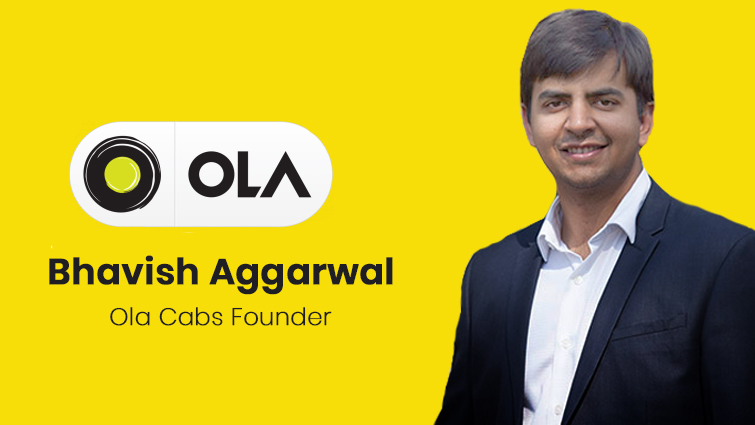
Bhavish Aggarwal is one of the most visionary entrepreneurs redefining mobility in India. As the co-founder and CEO of Ola, he has played a transformative role in reshaping how millions of people commute across cities. What began as a simple taxi-booking platform has evolved into a multi-dimensional mobility ecosystem, driven by innovation, localization, and a deep understanding of Indian consumer needs.
Born and raised in Ludhiana, Punjab, Bhavish Aggarwal exhibited a strong curiosity for technology and problem-solving from an early age. His academic journey led him to the prestigious Indian Institute of Technology (IIT) Bombay, where he pursued a degree in computer science and engineering. This foundation not only equipped him with technical expertise but also nurtured a mindset of innovation and analytical thinking.
After graduating, Bhavish joined Microsoft Research in India, where he worked on cutting-edge technologies. However, despite the promising career path, he felt a strong desire to build something of his own — something that could create real impact in people’s everyday lives. This ambition led him to leave his corporate job and step into the uncertain world of entrepreneurship.
The idea for Ola was born out of a personal experience. Bhavish once faced a frustrating situation while traveling, where a taxi driver refused service midway. This incident sparked a realization about the inefficiencies and lack of reliability in India’s transportation system. Along with his co-founder Ankit Bhati, he decided to build a platform that would address these challenges and offer a seamless commuting experience.
Founded in 2010, Ola started as a cab aggregator, connecting users with drivers through a simple mobile interface. At the time, the concept was relatively new in India, and gaining trust from both customers and drivers was a significant challenge. Early days were marked by operational hurdles, limited funding, and skepticism about the scalability of the model. However, Bhavish’s persistence and belief in the vision kept the company moving forward.
One of the key differentiators of Ola under Bhavish Aggarwal’s leadership has been its deep focus on localization. Unlike global competitors, Ola adapted its services to cater specifically to Indian conditions. This included integrating auto-rickshaws and bike taxis into the platform — a move that significantly expanded accessibility for users across different income groups and geographies.
Bhavish understood that India’s transportation needs were diverse and complex. By offering multiple ride options, flexible pricing, and localized solutions, Ola was able to create a product that resonated strongly with Indian consumers. This approach helped the company scale rapidly across cities, establishing itself as a dominant player in the market.
However, the journey was far from smooth. Ola faced intense competition from global ride-hailing giants, along with regulatory challenges and operational complexities. Managing a large network of drivers, ensuring service quality, and maintaining customer satisfaction required constant innovation and adaptability. Bhavish’s leadership during these phases was defined by resilience and a willingness to experiment.
A defining characteristic of Bhavish Aggarwal’s entrepreneurial style is his commitment to bold experimentation and long-term vision. Rather than limiting Ola to being just a cab service, he envisioned it as a comprehensive mobility platform. This led to the introduction of various new services, including shared rides, rental options, and outstation travel solutions.
One of his most forward-thinking moves has been the push toward electric mobility through Ola Electric. At a time when electric vehicles were still emerging in India, Bhavish recognized their potential to revolutionize transportation. By investing heavily in EV technology and manufacturing, he positioned Ola at the forefront of the sustainability movement.
Ola Electric aims to reduce dependence on fossil fuels and create a cleaner, more efficient mobility ecosystem. From electric scooters to large-scale manufacturing facilities, this initiative reflects Bhavish’s ambition to go beyond services and build products that shape the future of transportation.
In addition to mobility, Bhavish also explored opportunities in financial services, further expanding Ola’s ecosystem. By integrating payments, insurance, and other financial solutions into the platform, the company created additional value for both users and drivers. This diversification highlights his ability to identify new growth avenues while strengthening the core business.
Another important aspect of Bhavish Aggarwal’s leadership is his focus on customer-centric design. He believes that technology should simplify lives and solve real problems. Whether it is improving app usability, reducing wait times, or enhancing safety features, Ola continuously evolves based on user feedback and data-driven insights.
His journey also underscores the importance of resilience in entrepreneurship. Building a company at scale comes with numerous challenges — from financial pressures to market uncertainties. Bhavish has navigated these obstacles with determination, learning from failures and using them as stepping stones for growth.
For aspiring founders, his story offers valuable lessons. It emphasizes the importance of understanding local markets, staying adaptable, and continuously innovating. It also highlights that success is not just about having a great idea but about executing it effectively and evolving with changing circumstances.
Perhaps the most inspiring aspect of Bhavish Aggarwal’s journey is his ability to think beyond immediate success and focus on long-term impact. His vision for mobility goes beyond convenience — it aims to create a sustainable, inclusive, and technologically advanced ecosystem that benefits millions.
Today, Bhavish Aggarwal stands as a symbol of modern Indian entrepreneurship — bold, ambitious, and future-focused. Through Ola and Ola Electric, he continues to shape the way people move, not just in India but globally.
His journey is a reminder that transformative ideas often come from everyday problems — and with the right vision and execution, they can evolve into solutions that impact millions of lives.
